Truck Accident Lawsuits in Pittsburgh: Why These Cases Are Different From Car Accidents
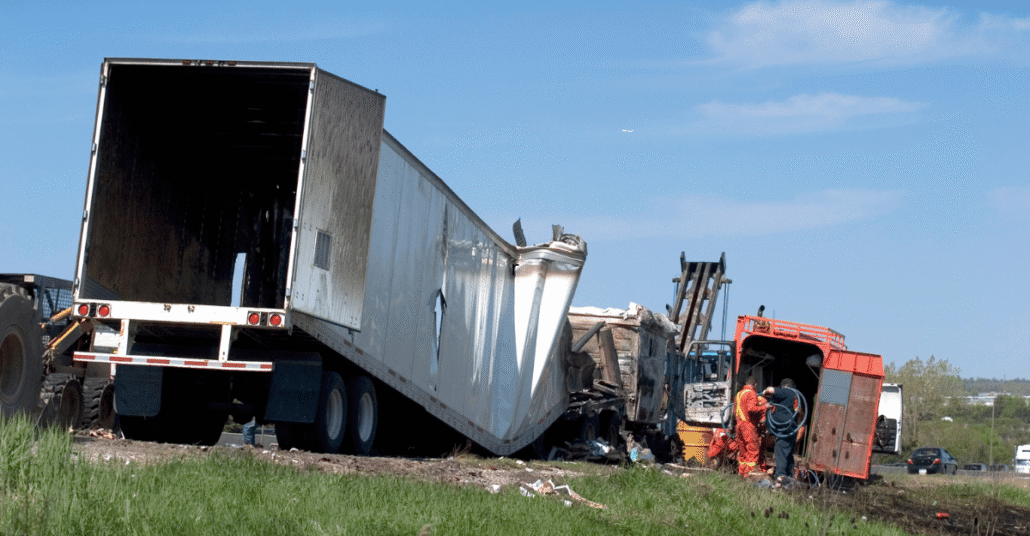
The moments following a collision with a commercial vehicle are chaotic and terrifying. The physical forces involved when an eighty-thousand-pound tractor-trailer strikes a standard passenger vehicle are devastating, frequently leaving victims with life-altering trauma. A sudden crash on the busy stretches of I-376 or a severe impact along Route 28 can instantly derail your health, your career, and your family’s financial stability.
Many injured individuals assume that pursuing compensation after a semi-truck wreck is identical to handling a standard car accident claim. This misconception often costs victims the financial recovery they desperately need. Commercial trucking litigation is a highly technical area of civil law. These cases involve layered corporate liability, aggressive national insurance carriers, and strict federal regulations that dictate how commercial drivers must operate.
How Do Federal Trucking Regulations Impact Your Pittsburgh Lawsuit?
A standard driver on the Pennsylvania Turnpike only needs to follow basic state traffic laws. Commercial truck drivers and the companies that employ them are bound by a massive framework of federal safety rules. The Federal Motor Carrier Safety Administration dictates almost every aspect of the commercial trucking industry to prevent catastrophic highway collisions.
One of the most common regulatory frameworks involved in personal injury litigation centers on Hours of Service rules. Driver fatigue is a leading cause of commercial wrecks across the country. To combat this, federal law restricts property-carrying commercial drivers to an eleven-hour driving limit after ten consecutive hours off duty. They are also prohibited from driving beyond the fourteenth consecutive hour after coming on duty, and they must take mandatory rest breaks.
Proving a federal violation dramatically changes the trajectory of a personal injury lawsuit. If our investigation reveals that a trucking company forced their driver to alter logbooks or ignore the driving limits to meet unrealistic delivery deadlines, that regulatory violation serves as powerful evidence of negligence.
They actively target specific federal violations to build your case:
-
Hours of service violations that prove the driver was severely fatigued behind the wheel.
-
Failure to perform mandatory pre-trip and post-trip vehicle safety inspections.
-
Ignoring strict federal drug and alcohol testing protocols immediately after an incident occurs.
-
Overloading the trailer beyond the safe gross vehicle weight rating, compromising stopping distance.
-
Operating the commercial vehicle with defective braking systems or dangerously bald tires.
Who Can Be Held Liable In A Commercial Truck Crash?
If a distracted commuter rear-ends you on Penn Avenue, liability usually rests entirely on that single driver. Commercial truck accidents operate under an entirely different legal framework. Through the legal doctrine of vicarious liability, a trucking company is generally responsible for the negligent actions of its drivers while they are operating within the scope of their employment.
However, liability rarely stops at the trucking company’s front door. The modern logistics industry is highly fragmented. A single tractor-trailer might involve a cab owned by one corporation, a trailer owned by another, and a driver hired through an independent staffing agency. Failing to identify every responsible party leaves vital compensation on the table. Uncovering the true ownership structure is a major part of the investigative process.
Depending on the specific facts of the crash, our legal team may pursue claims against several distinct entities to ensure a full recovery:
-
The truck driver for direct negligence, such as speeding, driving under the influence, or distracted driving.
-
The trucking company for negligent hiring practices, failing to conduct background checks, or ignoring mandatory safety protocols.
-
Third-party cargo loaders for improperly securing freight, leading to shifting weight and subsequent rollover accidents.
-
Maintenance contractors who failed to replace worn brake pads or identify failing steering components during routine service.
-
Vehicle manufacturers if a defective tire or faulty electronic component directly contributed to the collision.
Why Does Commercial Insurance Make Truck Accident Cases More Complex?
Standard passenger vehicles in Pennsylvania are only required to carry a minimum of fifteen thousand dollars in bodily injury liability coverage. In stark contrast, commercial motor vehicles are required by federal law to carry policies ranging from seven hundred and fifty thousand dollars to over five million dollars, depending on the type of cargo they transport. This massive difference in policy limits completely changes how insurance companies handle the claims process.
When millions of dollars are on the line, commercial insurers do not wait for a police report to be finalized. They maintain dedicated rapid response teams. Within hours of a major collision in Allegheny County, the insurance company will dispatch private investigators, accident reconstruction specialists, and defense attorneys directly to the crash site. Their sole objective is to gather evidence that shifts blame away from their driver and minimizes their financial exposure.
Dealing with a corporate claims adjuster is a highly adversarial process. They will employ tactics designed to trap you into making statements that harm your legal position. They often call victims while they are still recovering in the hospital, acting friendly and empathetic while quietly recording the conversation to use against them later.
Common tactics used by commercial insurers to devalue claims include:
-
Offering a fast, lowball settlement before the full extent of your physical injuries is known or documented.
-
Requesting open-ended medical authorizations to search your past health history for pre-existing conditions.
-
Attempting to force you into a recorded statement without your legal counsel present on the call.
-
Blaming the crash on your actions, such as arguing you lingered in the truck’s blind spot for too long.
What Evidence Is Unique To Tractor-Trailer Accident Investigations?
In a standard car accident, the investigation typically relies on the local police report, scene photographs, and witness testimony. Truck accident litigation requires a much deeper, highly technical approach to evidence preservation. Modern eighteen-wheelers are equipped with advanced technology that records critical data about the vehicle’s operation in the moments leading up to an impact.
The most important piece of evidence is often the engine control module, commonly referred to as the black box. This device records the truck’s exact speed, throttle position, brake application, and steering angles leading up to the crash. Additionally, Electronic Logging Devices track the driver’s exact hours behind the wheel, making it nearly impossible for them to falsify their driving time without leaving a digital footprint.
Because trucking companies control this evidence, it can easily disappear or be overwritten if immediate legal action is not taken. Our attorneys act quickly to secure this data by sending formal spoliation letters. These legal directives put the trucking company on notice that they must preserve all relevant evidence or face severe legal sanctions from the court.
A thorough commercial investigation targets several unique categories of evidence:
-
Electronic black box downloads and engine tracking data.
-
Dashboard camera footage from the cab of the commercial truck.
-
The driver’s complete qualification file, including past traffic violations and required medical certifications.
-
Dispatch logs and internal company communications regarding delivery deadlines.
-
Pre-trip and post-trip inspection reports spanning the weeks prior to the crash.
How Do Catastrophic Injuries Change The Value Of A Truck Accident Claim?
The laws of physics guarantee that passenger vehicles will suffer the brunt of the damage during a collision with an eighteen-wheeler. An ordinary passenger car weighs roughly four thousand pounds. A fully loaded commercial truck can weigh up to eighty thousand pounds. This massive weight disparity generates incredible force upon impact, crushing standard vehicles and inflicting devastating trauma on the occupants inside.
Victims of commercial wrecks rarely walk away with minor whiplash. They frequently sustain catastrophic injuries that permanently alter their quality of life. We routinely see clients dealing with traumatic brain injuries, complete or partial paralysis, multiple crushed limbs, and severe internal organ damage. These injuries often require immediate transport to regional trauma centers like Allegheny General Hospital or UPMC Mercy for life-saving surgical intervention.
The sheer severity of these injuries dramatically increases the financial value of the legal claim. Recovery is no longer just about covering a single emergency room bill. We must account for future surgeries, years of specialized physical therapy, home modification costs, and the permanent loss of earning capacity.
To ensure you receive maximum compensation, we thoroughly document:
-
All past, present, and future medical expenses related to the crash.
-
Lost wages for the time you spent recovering and away from work.
-
Loss of future earning capacity if you can no longer perform your previous job duties.
-
The physical pain and profound emotional suffering you endure daily.
-
Costs associated with modifying your vehicle or home to accommodate a permanent disability.
What Makes Pittsburgh Highways Particularly Dangerous For Big Rigs?
Commercial drivers traveling through Western Pennsylvania face geographical challenges that do not exist in flatter parts of the country. Pittsburgh’s local grid is defined by deep river valleys, steep hillsides, and aging infrastructure. Navigating an articulated eighty-thousand-pound vehicle through this terrain requires heightened vigilance, specialized training, and a strict adherence to safe following distances.
When out-of-state drivers unfamiliar with Allegheny County’s topography attempt to maintain highway speeds through our unique corridors, the results are often disastrous. The sudden braking required before entering the Fort Pitt Tunnel frequently catches fatigued truck drivers off guard. The tight lanes and blind curves along Route 28 leave zero margin for error. If a commercial driver drifts slightly out of their lane on these narrow stretches, they can easily crush a smaller vehicle against the concrete barriers.
Weather also plays a massive role in local commercial wrecks. Lake effect snow and sudden freezing rain can turn the steep grades of the Parkway East and West into frictionless slides. Truck drivers have a fundamental legal duty to reduce their speed during adverse weather conditions.
Specific local hazards that routinely trigger commercial crashes include:
-
Sharp, blind curves on aging highway corridors.
-
Extremely short highway on-ramps that force sudden merging actions.
-
Severe winter weather that rapidly decreases traction on steep hills.
-
Congested bridge and tunnel bottlenecks that cause traffic to stop instantly.
What Is The Statute Of Limitations For Filing A Truck Accident Lawsuit In Pennsylvania?
The legal system imposes strict deadlines on your ability to seek justice. In Pennsylvania, the statute of limitations for personal injury claims is generally two years from the exact date of the accident. If you fail to file a formal complaint in the appropriate court system before this window closes, the court will permanently dismiss your claim. This leaves you entirely responsible for your mounting hospital invoices and lost income, with no further legal recourse against the negligent driver or trucking company.
While twenty-four months might seem like ample time to recover, waiting to secure legal representation is a severe strategic mistake. The strongest cases are built in the immediate aftermath of the collision, when physical evidence is fresh and witnesses can clearly recall the events.
Taking rapid action allows your legal team to secure essential evidence before it disappears entirely:
-
Subpoenaing the at-fault driver’s cell phone records to definitively prove they were texting or browsing.
-
Downloading the electronic data recorder from the striking vehicle.
-
Securing surveillance video from nearby businesses before the footage is automatically overwritten.
-
Interviewing independent witnesses while their memory of the event remains sharp and highly accurate.
If your case requires formal litigation, we file the necessary paperwork directly at the local courthouse, such as the Allegheny County Court of Common Pleas. Initiating this process demonstrates to the defense that we are fully prepared to present the facts to a jury if they refuse to negotiate fairly.
How Can Our Pittsburgh Truck Accident Attorneys Protect Your Rights?
Recovering from severe physical trauma requires your complete focus and energy. The experienced attorneys at Caroselli, Beachler & Coleman handle the exhausting legal and financial burdens so you can concentrate entirely on your physical rehabilitation and returning to your normal life. Our legal team thoroughly investigates the accident scene, consults with leading accident reconstruction professionals, and meticulously documents the full extent of your physical and financial damages. We actively pursue full compensation for your emergency room care, your ongoing physical therapy, your lost wages, and the immense physical agony you have endured because of someone else’s negligence.
Contact us today to schedule a free, no-obligation consultation. We are ready to listen to your story, evaluate your situation, and explain your best legal options moving forward.
Frequently Asked Questions
Does a truck driver’s logbook violation prove they caused the crash?
A logbook violation alone does not automatically prove fault, but it serves as highly compelling evidence of negligence. If we can demonstrate that the driver was operating beyond federal hours of service limits at the time of the crash, it establishes that fatigue likely played a direct role in the collision. This regulatory breach heavily tilts the liability argument in your favor.
Can I sue the trucking company if the driver is an independent contractor?
Yes, you can often still pursue the trucking company even if they classify the driver as an independent contractor. Federal regulations and state laws frequently hold motor carriers responsible for the vehicles operating under their specific Department of Transportation placard. We thoroughly analyze the driver’s employment contract to establish the necessary chain of corporate liability.
What happens if cargo spilled onto the road and caused my accident?
If unsecured cargo falls onto the highway and causes you to crash, multiple parties may be held liable. The responsibility could fall on the truck driver for failing to inspect the load, or on the third-party logistics company that originally loaded and strapped the freight. We investigate the bill of lading and loading dock procedures to identify exactly who failed to secure the cargo properly.
How long does it take to settle a commercial truck accident lawsuit?
There is no fixed timeline for resolving a commercial truck claim. Because these cases involve complex federal evidence, severe physical injuries, and highly aggressive corporate defense teams, they generally take much longer to resolve than standard car crashes. A resolution can take anywhere from several months to a few years depending on whether the insurance company negotiates fairly or forces the case to trial.
Do I have to pay upfront for an attorney to investigate my truck crash?
No, you do not need to pay out of pocket to hire our legal team. We handle commercial truck accident claims on a strict contingency fee basis. This means we cover the substantial costs of accident reconstruction and evidence gathering, and you only owe attorney fees if we successfully secure a financial recovery on your behalf.



 What to Expect in Truck Accident Claims