What Percentage of Car Accidents Are Caused by Human Error?
Tens of thousands of individuals are killed in auto accidents each year. In fact, the Washington Post reported in 2019 that since the year 2000, more Americans have died in car crashes than in both world wars put together. Motor vehicle crashes are the leading cause of death among teenagers in the US, accounting for more than one third of all teen fatalities. And car accidents also result in hundreds of thousands of long-term disabilities every year.
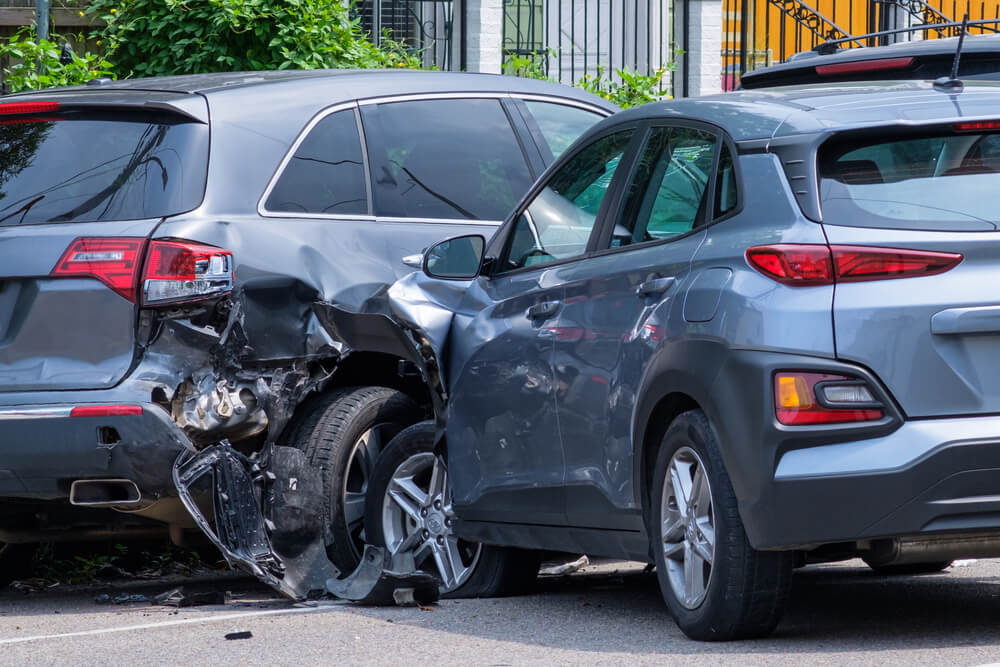
One of the saddest facts about car accidents is that most of them are preventable. A 2016 study by the National Highway Transportation Safety Administration (NHTSA) found that human error accounts for anywhere between 94% to 96% of all auto accidents. Several other studies have produced similar results, and every study that we know of shows that the percentage of car accidents that are caused by human error is at least 90%.
In recent years, advocates of self-driving vehicles have used statistics like these to argue that if we eliminate the human element, our roads will be much safer. Self-driving cars have challenges of their own, however, and it will probably be a while before they become mainstream. But in the meantime, we need to do a better job of educating new and seasoned drivers alike to the common driving behaviors that increase the likelihood of an accident.
Begin Your Path to Justice Today
The idea of contacting an attorney can seem overwhelming, but it’s a completely normal part of the process. At Caroselli, Beachler & Coleman, L.L.C., we understand that you might be hesitant to reach out, and we work hard to make the process as smooth and straighTforward as possible. We offer a free consultation where you can discuss your concerns without any pressure or obligation.
During our conversation, we’ll listen to your story, answer your questions, and outline your legal options. Talking to us doesn’t mean you’re committing to take legal action; it’s just about gaining clarity on how to move forward. We’re here to help you understand your situation better and explore what your next steps could be.
Remember, you are not alone in this process – we’ve been guiding individuals like you for over four decades. Take the first step today; it’s your opportunity to take control of your future.
Common Car Accidents Caused by Driver Error in Pittsburgh
Pittsburgh presents a unique set of challenges for motorists. From the narrow, winding streets of Mt. Washington to the complex interchanges of the Parkway East and West, the city’s geography demands constant attention. However, statistical data consistently indicate that the vast majority of collisions in Allegheny County are not the result of road design or weather alone, but are rooted in human error. When a motorist fails to uphold their duty of care to others on the road, the resulting injuries can be life-altering.
Understanding the specific types of driver errors that lead to these incidents is essential for anyone seeking to navigate the aftermath of a crash.
The Role of Speeding in Urban and Highway Collisions
In Pennsylvania, and specifically within the bustling corridors of Pittsburgh, speeding remains a primary factor in traffic fatalities. It is common practice among a large percentage of drivers to regularly exceed the posted limit, often by five or 10 mph. Motorists frequently operate under the assumption that law enforcement will not issue a citation unless the vehicle is traveling significantly over the limit. This mindset pushes the boundaries of safety.
Speed limits are established based on engineering studies that account for pedestrian traffic, neighborhood density, and road curvature. When a driver exceeds these limits, they fundamentally alter the physics of a potential impact. High speeds reduce the time a driver has to react to a sudden hazard—such as a person stepping into a crosswalk in the Strip District or a vehicle merging abruptly on the Liberty Bridge. Furthermore, the distance required to bring a vehicle to a complete stop increases exponentially with speed. A collision at high speed is significantly more likely to result in catastrophic injury or death than one occurring at the legal limit.
Aggressive and Reckless Driving Behaviors
Speeding is frequently a component of a broader pattern of aggressive driving. In the competitive environment of rush-hour traffic on I-279 or Route 28, some motorists prioritize their own schedule over the safety of the public. Aggressive driving manifests in several dangerous behaviors:
- Tailgating: Following another vehicle too closely leaves no margin for error if the lead driver must brake suddenly.
- Erratic Lane Changes: Weaving through traffic without signaling creates confusion and forces other drivers to take evasive action.
- Running Traffic Signals: Speeding through a yellow light or failing to stop for a red light is a frequent cause of “T-bone” collisions in intersections.
- Illegal Passing: Attempting to pass on the right or in a no-passing zone, particularly on two-lane roads outside the city center, often leads to head-on collisions.
When these behaviors become extreme, they may be legally classified as reckless driving. Under Pennsylvania law, this involves a “willful or wanton disregard for the safety of persons or property.” In such cases, the driver’s actions move beyond simple negligence into a category of behavior that may justify different legal considerations during a claim.
The Crisis of Distracted Driving
The digital age has introduced a persistent hazard to Pittsburgh roadways: the distracted driver. While distractions have always existed—such as adjusting the radio or eating—the advent of smartphones has created a visual, manual, and cognitive distraction that is unparalleled.
When a driver engages with an electronic device, they are effectively driving blind for several seconds at a time. At 55 mph, a five-second glance at a text message is equivalent to driving the length of a football field without looking at the road. In an urban environment like Downtown Pittsburgh, where traffic patterns change by the second, this lapse is often fatal. Pennsylvania law prohibits texting while driving, reflecting the high risk associated with this behavior. Beyond electronics, distractions also include interacting with passengers, grooming, or focusing on GPS devices rather than the surrounding environment.
Chemical Impairment and Road Safety
Driving while under the influence of alcohol or drugs remains a significant threat to public safety. Impairment affects every faculty required for safe vehicle operation. Alcohol is a central nervous system depressant that slows reaction times, blurs vision, and impairs judgment. An impaired driver may fail to notice a stop sign, misjudge the distance of an oncoming vehicle, or drift into another lane.
Furthermore, the rise in the use of prescription medications and illegal substances adds another layer of danger. Certain medications can cause extreme drowsiness or dizziness, even if taken as prescribed. In the eyes of the law, a driver can be held liable for an accident caused by impairment regardless of whether the substance was legal or illegal. The focus remains on whether the driver’s ability to operate the vehicle safely was compromised.
The Underestimated Danger of Drowsy Driving
Drowsy or fatigued driving is a factor in thousands of accidents annually, yet it often receives less public attention than impairment or speeding. Fatigue has a physiological effect on the brain similar to alcohol consumption; being awake for 18 consecutive hours can result in impairment equivalent to a blood alcohol content (BAC) of 0.05%.
A National Sleep Foundation study found that nearly half of all Americans have operated a vehicle while feeling drowsy. Even more concerning, a significant percentage of drivers admit to having actually fallen asleep behind the wheel. Fatigue leads to “microsleeps”—short bursts of sleep lasting only a few seconds—which are long enough to cause a vehicle to veer off the road or into oncoming traffic. In a city where many residents work long shifts in the healthcare or manufacturing sectors, the risk of fatigue-related crashes is a constant concern.
Identifying Additional Liable Parties
While the driver of a vehicle is often the primary focus after an accident, legal investigations frequently reveal that other parties share responsibility for the harm caused. Determining liability requires a thorough review of the circumstances surrounding the crash. Other potentially responsible parties include:
- Employers of Commercial Drivers: Under the doctrine of respondeat superior, an employer can be held liable for the actions of their employee if the accident occurred within the scope of employment. This is common in accidents involving delivery trucks, buses, or tractor-trailers.
- Vehicle Manufacturers: If a mechanical failure—such as a defective braking system, a tire blowout due to a manufacturing flaw, or an airbag that fails to deploy—contributes to the accident or the severity of the injuries, the manufacturer or distributor may be held accountable under product liability laws.
- Government Entities and Contractors: The party in charge of maintaining the roadways in and around Pittsburgh has a duty to ensure the environment is safe. Liability may arise from poorly marked construction zones, failure to repair known potholes, or inadequate signage.
- Establishments Serving Alcohol: Under Pennsylvania’s “Dram Shop” laws, a business that serves alcohol to a visibly intoxicated person who later causes an accident may be held responsible for the damages.
Injured in a Car Accident in Pittsburgh? Contact Caroselli, Beachler & Coleman for Legal Help
If you or a loved one suffered injury in a vehicle crash, chances are it was caused by some type of human error. If this is the case, you may have a right to compensation. For a free consultation to assess your case and find out what your legal options are, call Caroselli, Beachler & Coleman today at 412-567-1232 or toll-free at 866-466-5789. You may also send us a message through our online contact form.