Can I Sue after a Car Accident in Pittsburgh if I Was Partially at Fault?
The moments immediately following a collision are disorienting and chaotic. Amid the flashing lights of emergency vehicles, the shock of the impact, and the sudden onset of physical pain, a heavy wave of anxiety often sets in. If you recognize that a momentary distraction or a slight misjudgment on your part contributed to the crash, you might assume you have forfeited your right to seek financial recovery. This is a common and costly misconception.
The Unique Realities of Driving in Western Pennsylvania
Determining fault is rarely a straightforward process of assigning one hundred percent of the blame to a single driver. In urban environments, collisions are typically the result of compounding factors. Our city presents a unique set of challenges for any driver, and these local conditions frequently play a central role in how liability is apportioned after a crash.
Pittsburgh’s topography contributes heavily to safety concerns. Many neighborhoods feature steep, winding streets with limited sight distances, making it harder for drivers to anticipate sudden stops or crossing pedestrians. Winding roads like Route 28 or the steep inclines of Troy Hill become incredibly dangerous during our frequent winter storms or heavy spring rains.
Furthermore, local driving culture includes well-known, yet legally problematic, maneuvers. The “Pittsburgh Left” where the first driver waiting to turn left at a green light proceeds immediately before oncoming traffic moves is not recognized in Pennsylvania traffic law. When a driver accelerates into a left turn instead of yielding to oncoming traffic, and the oncoming driver happens to be traveling slightly above the speed limit, establishing who is primarily responsible becomes a complex legal dispute. Similar conflicts routinely occur in high-traffic areas, from the confusing intersection geometries where Forbes and Fifth Avenues cross in Oakland, to the heavily congested corridors of the Strip District on a busy weekend.
How Does Pennsylvania’s Comparative Negligence Law Work?
Pennsylvania follows a modified comparative negligence rule, meaning you can still recover financial compensation after a car accident even if you are partially at fault. However, your percentage of blame must not exceed 50 percent, and your final compensation is reduced by your exact percentage of fault.
This legal framework acknowledges that collisions are rarely completely one-sided events. The law requires insurance adjusters and civil juries to evaluate the actions of everyone involved and assign a specific percentage of liability to each party. To illustrate how this impacts your financial recovery, imagine your total damages from a crash including medical bills, lost wages, and pain and suffering, equal $100,000. If the investigation determines you were 20 percent responsible because you failed to signal a lane change, your recovery is reduced by that 20 percent. You would ultimately receive $80,000.
The most critical aspect of the Pennsylvania statute is the 51 percent bar. If your assigned share of liability reaches 51 percent or higher, the law completely bars you from recovering any compensation from the other driver. Because the difference between 50 percent fault and 51 percent fault dictates whether you receive thousands of dollars or nothing at all, establishing a clear, objective narrative of the other driver’s primary negligence is paramount.
Insurance companies are highly motivated to push your assigned fault across that 51 percent threshold. They will heavily scrutinize your actions leading up to the impact. Common factors adjusters use to shift blame onto victims include:
- Traveling above the posted speed limit, even by just a few miles per hour.
- Failing to use turn signals when merging on highways like I-376.
- Distractions inside the vehicle, such as looking at a phone or adjusting the radio.
- Following the lead vehicle too closely to allow for a safe braking distance.
- Driving with broken taillights or headlights during nighttime hours.
What Should I Do Within 24 Hours After a Car Accident in Pittsburgh?
After a Pittsburgh car crash, immediately move to a safe location out of traffic and dial 911 to request police and EMS. Seek a medical evaluation at a local hospital, document the scene with photos, and collect contact information from any witnesses before speaking with insurance adjusters.
Your primary focus following an impact must be safety and medical stabilization, but gathering evidence at the scene is vital for protecting your future legal claim, especially when fault is contested. Calling 911 ensures that the Pittsburgh Bureau of Police or the Pennsylvania State Police respond to the scene and create an official accident report. This document acts as an objective record of the date, time, weather conditions, and the parties involved. Without it, the other driver may easily change their story, and their insurance company will likely argue that the incident did not happen as you described.
Even if you initially feel fine, medical attention is not optional following an impact with a moving vehicle. Adrenaline frequently masks severe internal trauma. You should seek an immediate evaluation at a local trauma center, such as UPMC Presbyterian, UPMC Mercy, or Allegheny General Hospital. Official, contemporaneous documentation of your injuries is necessary to support your health and your subsequent insurance claim.
If you are physically able to do so safely, take the following steps to preserve evidence:
- Photograph the Scene: Take wide shots showing the final resting positions of the vehicles, traffic lights, stop signs, and any skid marks. Include photos of the surrounding area, whether it is a busy intersection in Downtown or a quiet residential street in the South Side.
- Identify Witnesses: Gather the names and phone numbers of bystanders or other drivers who saw the crash. Independent witnesses are incredibly valuable when determining comparative fault.
- Limit Your Conversation: Provide the responding officers with the facts of what happened, but do not apologize or speculate about your own degree of fault. Statements made in the chaotic aftermath can be taken out of context to increase your liability percentage.
Understanding Full Tort vs. Limited Tort in Shared Fault Cases
When evaluating a shared fault accident, it is necessary to examine your own auto insurance policy, specifically your selection of tort coverage. Pennsylvania allows drivers to choose between Full Tort and Limited Tort insurance options, and this choice dictates what types of damages you are legally permitted to seek.
Limited Tort saves policyholders money on their monthly premiums, but it heavily restricts the right to sue for pain and suffering. If you selected Limited Tort, you generally cannot seek non-economic damages unless your injuries are severe enough to be classified as a “serious impairment of body function.” Conversely, Full Tort allows you to seek comprehensive compensation for all your pain and suffering, regardless of the severity of the injury.
A common question is whether your selection of Limited Tort prevents you from recovering compensation if you also share partial fault. The percentage of your fault and your tort selection are two distinct legal hurdles. First, you must be 50 percent or less at fault to hold the other driver liable. Second, if you meet that criteria, your tort selection dictates the type of compensation you can pursue from them.
However, there are critical exceptions to the Limited Tort restriction that frequently arise in local claims. You automatically regain Full Tort rights, allowing you to sue for pain and suffering if your injuries meet the serious injury threshold, if the at-fault vehicle is uninsured or underinsured (a common occurrence given our proximity to Ohio and West Virginia), or if you were injured while riding as a passenger in a commercial vehicle.
What Types of Compensation Can I Recover if I Share Blame?
If you share partial fault in a Pennsylvania auto accident, you can still recover economic damages for medical bills and lost wages, plus non-economic damages for pain and suffering if you have Full Tort coverage. Your total awarded compensation will be reduced by your assigned percentage of fault.
Compensation is fundamentally designed to make the injured victim whole by addressing both the direct financial losses and the profound impact on their quality of life. The fact that you share minor blame does not negate the reality of your physical trauma or the financial burden placed upon your family.
Injured individuals may recover comprehensive economic damages. This includes past and future medical costs ranging from ambulance transport and emergency room care to long-term physical therapy and necessary surgeries. Economic damages also provide reimbursement for the paychecks you miss while recovering at home. If a permanent disability prevents you from returning to your previous career or working full-time, you are entitled to claim the difference in your lifetime earning capacity.
Non-economic damages address the intangible, yet very real, consequences of the crash. These include:
- Pain and Suffering: Compensation for the physical agony endured during the collision and throughout the medical recovery process.
- Emotional Distress: Damages for the psychological impact, such as post-traumatic stress, anxiety regarding driving, or depression resulting from physical limitations.
- Loss of Enjoyment of Life: Compensation for the inability to participate in hobbies, exercise, or engage in family activities as you did before the crash.
- Scarring and Disfigurement: Significant compensation awarded for permanent, visible scarring resulting from lacerations, burns, or surgical incisions.
How Do Insurance Companies Determine Fault After a Crash?
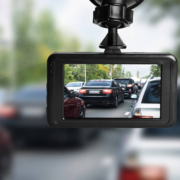
Insurance companies determine fault by reviewing the official police report, analyzing physical evidence from the scene, interviewing witnesses, and examining damage to the vehicles. Adjusters also look for traffic law violations and use surveillance footage or dashcam video to establish each driver’s degree of negligence.
It is important to understand that the initial fault determination made by a police officer at the scene is not the final word in a civil claim. Officers issue citations based on traffic code violations, but civil liability is determined by a broader assessment of negligence. Insurance adjusters conduct their own independent investigations to look for any reason to shift liability onto you.
Adjusters are trained to look for inconsistencies in your story. They will compare what you say during a recorded statement to the intake notes from your emergency room visit. If you mention to an ER nurse that you were “in a hurry” when the crash happened, the adjuster will use that medical record to argue you were driving aggressively and therefore share a higher percentage of the blame.
Because the investigation phase is highly adversarial, allowing a legal professional to manage all communication with the insurance carriers protects your interests. We routinely gather evidence that adjusters conveniently overlook, including:
- Securing traffic camera footage from PennDOT or local municipalities before it is overwritten.
- Subpoenaing private security camera footage from businesses along the accident corridor.
- Retaining accident reconstruction specialists who can analyze skid marks, vehicle crush damage, and computer data downloaded from the vehicles’ event data recorders to prove the other driver’s speed at the moment of impact.
How Long Do I Have to File a Lawsuit in Allegheny County?
Under Pennsylvania law, you generally have two years from the date of your car accident to file a personal injury lawsuit. Missing this critical statute of limitations typically results in a permanent bar to recovering any compensation for your injuries and property damage.
While two years may sound like a substantial amount of time, waiting to initiate an investigation is a serious tactical error. In urban environments like Pittsburgh, vital evidence disappears quickly. Construction zones change rapidly, skid marks wash away, and witnesses move or forget crucial details regarding traffic light colors or exact vehicle positions.
Furthermore, if the vehicle that struck you was a municipal vehicle such as a City of Pittsburgh garbage truck, a Port Authority of Allegheny County (PAT) bus, or a local police cruiser the rules change drastically. For claims involving government entities, you generally must file a formal notice of intent to sue within six months of the incident. Missing this much shorter administrative deadline can destroy your claim before the two-year statute of limitations even approaches.
Filing a lawsuit officially moves your case into the Pennsylvania court system. If your accident occurred in the Greater Pittsburgh area, your filings and subsequent litigation will likely be handled at the Allegheny County Court of Common Pleas, located in the City-County Building on Grant Street.
Rebuilding Your Life After a Complex Collision
Being involved in a crash is traumatic, and dealing with an insurance company attempting to blame you for the incident only compounds that stress. The attorneys at Caroselli, Beachler & Coleman have the resources and local knowledge required to protect your rights, untangle complex liability disputes, and pursue the comprehensive compensation your recovery demands. If you have questions about your degree of fault or the strength of your case, we are here to provide clear, straightforward answers.
Contact our office today to schedule a free, no-obligation consultation. We can help you understand your legal options and begin the process of moving forward.