Pittsburgh Construction Vehicle Accident Lawyers
Pittsburgh is a city in constant motion, a landscape of perpetual growth and renewal. From the major infrastructure projects on the Parkway East to the development transforming neighborhoods like the Strip District and Lawrenceville, the sight and sound of construction are a familiar part of life in Allegheny County. With this progress comes the constant presence of heavy construction vehicles—dump trucks, cranes, excavators, and bulldozers sharing our roads with passenger cars, cyclists, and pedestrians.
Why Are Construction Vehicle Accidents So Legally Complex?
An accident involving a front-end loader or a cement mixer is not a simple fender-bender. These cases present unique legal challenges that set them apart from typical traffic collisions. The sheer weight and force of heavy machinery mean injuries are often severe or catastrophic. Moreover, identifying the at-fault party is rarely straightforward.
Unlike an accident with a single driver in a personal car, a construction vehicle incident can involve the driver, their employer (the construction company), the general contractor for the job site, various subcontractors, the equipment manufacturer, and even the entity responsible for the construction zone’s design. Each of these parties may carry its own insurance policy and have its own legal team focused on minimizing its financial exposure. Navigating this web of corporate defendants and insurers is a formidable task for anyone trying to recover from a serious injury.
What Are the Common Causes of Construction Equipment Accidents in Pittsburgh?
Collisions involving heavy construction machinery often stem from a combination of factors related to driver conduct, company policies, and the nature of the equipment itself. Pinpointing the root cause is a foundational step in building a strong claim for compensation.
- Driver Negligence: The operator of the heavy machinery may be at fault due to a number of negligent actions, including distracted driving, fatigue from long hours, speeding, or operating the vehicle while impaired.
- Inadequate Training: Operating a complex piece of equipment like a crane or backhoe safely requires specific and extensive training. A company that fails to properly train its operators can be held liable for resulting accidents.
- Poor Vehicle Maintenance: Construction companies have a duty to keep their fleet of vehicles in safe, working condition. Accidents can be caused by mechanical failures such as faulty brakes, tire blowouts, hydraulic system failures, or malfunctioning warning signals.
- Large Blind Spots: Heavy equipment is notorious for its significant blind spots, or “no-zones,” where the operator cannot see adjacent vehicles or pedestrians. Many accidents occur when a smaller car disappears into one of these zones during a turn or lane change.
- Improper Loading or Unsecured Loads: Materials falling from a dump truck or flatbed trailer can create deadly road hazards. This often results from overloading the vehicle or failing to properly secure the cargo.
- Unsafe Work Zone Practices: Negligently designed or managed construction zones can contribute to accidents. This can include poor signage, inadequate lane markings, or a lack of flaggers to direct traffic safely.
- Failure to Yield: Construction vehicles entering or exiting a job site may fail to yield the right-of-way to other motorists, leading to serious T-bone or head-on collisions.
What Types of Heavy Machinery Are Often Involved in These Collisions?
The term “construction vehicle” covers a wide range of heavy-duty equipment. Each type presents its own distinct hazards on public roads and at work sites. Our firm has experience handling cases involving various types of machinery, including:
- Dump Trucks: Used to haul dirt, rock, and debris, their immense weight creates long stopping distances and the potential for devastating impact forces.
- Cement Mixers: These heavy, high-center-of-gravity vehicles are prone to rollovers if the driver takes a turn too quickly.
- Cranes: Whether mobile or stationary, crane accidents can result from operator error, mechanical failure, or collapse, endangering a wide area.
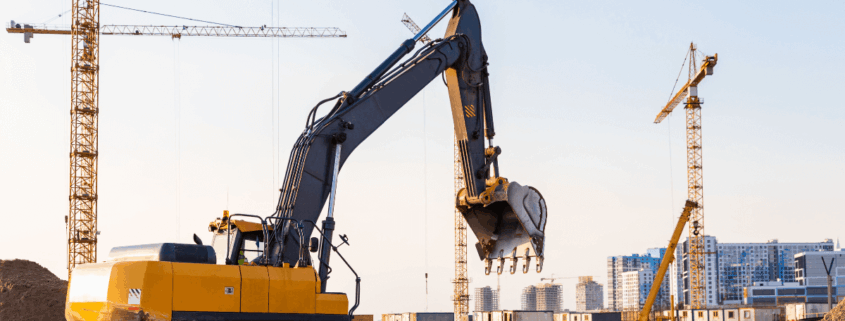
- Excavators and Backhoes: The swinging motion of the hydraulic arm and bucket can strike nearby vehicles or pedestrians if the operator is not paying close attention.
- Bulldozers and Front-End Loaders: While often used off-road, these vehicles frequently travel on public streets between job sites, where their large buckets can obstruct the driver’s view.
- Road Rollers and Pavers: These slow-moving vehicles can cause serious rear-end collisions if traffic behind them is not properly warned.
- Graders and Scrapers: The large blades on these machines can extend into adjacent lanes, creating a serious hazard for passing vehicles.
What Severe Injuries Result from Collisions with Construction Vehicles?
Because of the massive size and weight discrepancy between heavy machinery and a typical passenger car, the occupants of the smaller vehicle almost always suffer the most severe harm. The injuries sustained in these crashes can require a lifetime of medical care and permanently alter a person’s ability to work and enjoy life.
Common injuries include:
- Traumatic Brain Injuries (TBIs): The violent impact can cause the brain to collide with the skull, resulting in concussions or more severe injuries that lead to permanent cognitive, physical, or emotional impairments.
- Spinal Cord Injuries: Damage to the spinal cord can result in chronic pain, loss of motor function, and partial or complete paralysis (paraplegia or quadriplegia).
- Complex Bone Fractures: The force of a collision can shatter bones, frequently requiring multiple surgeries, the implantation of metal plates and screws, and extensive physical rehabilitation.
- Internal Organ Damage: Blunt force trauma can cause severe damage to vital organs like the liver, spleen, or kidneys, resulting in life-threatening internal bleeding.
- Crush Injuries and Amputations: If an individual is pinned by a vehicle or piece of equipment, the resulting crush injuries can cause catastrophic damage to limbs, often necessitating amputation.
- Wrongful Death: In the most tragic cases, a collision with a construction vehicle is fatal. In these situations, the surviving family members may have a claim to seek justice for their profound loss.
Who Can Be Held Liable for a Pittsburgh Construction Vehicle Crash?
One of the most difficult aspects of a construction vehicle accident case is identifying all potentially liable parties. Responsibility may not rest solely with the driver. A thorough investigation often reveals that multiple parties share fault for the incident.
Potentially liable parties may include:
- The Vehicle Operator: If the driver was operating the machinery negligently (e.g., speeding, distracted, or impaired), they can be held personally responsible.
- The Construction Company: As the employer, the company is typically responsible for the actions of its employees under a legal principle known as “vicarious liability.” The company can also be held directly liable for its own negligence, such as failing to train drivers, encouraging unsafe practices, or neglecting vehicle maintenance.
- The General Contractor: The primary contractor overseeing a construction project has a responsibility to ensure the overall safety of the work site, including the flow of traffic in and around it.
- Subcontractors: If the negligent driver worked for a subcontractor, that company could also be held liable for the harm caused.
- The Equipment Manufacturer: If the accident was caused by a defect in the vehicle’s design or a faulty component (like brakes or steering), a product liability claim may be brought against the manufacturer.
- A Maintenance Provider: If a third-party company was hired to service the construction vehicle and performed negligent repairs, that company could share in the liability.
- Governmental Entities: A city, state, or other government body could be partially at fault if the accident was caused by a dangerous road design or a poorly managed work zone under its control.
What Types of Compensation Can Be Recovered in a Construction Vehicle Accident Claim?
If you have been injured due to the negligence of another party, you are entitled to seek compensation for the full extent of your losses. The purpose of a personal injury claim is to provide the financial resources necessary to cover the costs associated with the accident and to compensate for the non-economic harm you have endured.
Damages in a construction vehicle accident case may include:
- Medical Expenses: This covers all past and future medical costs related to your injuries, such as emergency room care, hospitalizations, surgeries, rehabilitation, prescription medications, and any necessary long-term care.
- Lost Wages: Reimbursement for the income you lost while you were unable to work during your recovery.
- Loss of Future Earning Capacity: If your injuries result in a permanent disability that prevents you from returning to your previous career or diminishes your ability to earn a living, you can seek compensation for this future financial loss.
- Pain and Suffering: Compensation for the physical pain, emotional distress, and mental anguish you have suffered as a result of the accident and your injuries.
- Property Damage: The costs to repair or replace your vehicle and any other personal property that was destroyed in the collision.
- Wrongful Death Damages: For families who have lost a loved one, a claim can be pursued to recover for funeral and burial expenses, the loss of the deceased’s income and support, and the loss of their guidance and companionship.
Take the First Step Toward Your Recovery
The aftermath of a serious accident involving a construction vehicle can be an overwhelming experience. If you or a loved one has been harmed in a collision with a construction vehicle in the Pittsburgh area, we invite you to learn about your legal options. Our team is committed to helping injured individuals navigate the legal process and pursue the full and fair compensation they deserve.
To discuss your case with a member of the Caroselli, Beachler & Coleman team, please call us at 866-565-4949 or 412-253-2925, or contact us online to schedule a free and confidential consultation. Let us help you on the path forward.